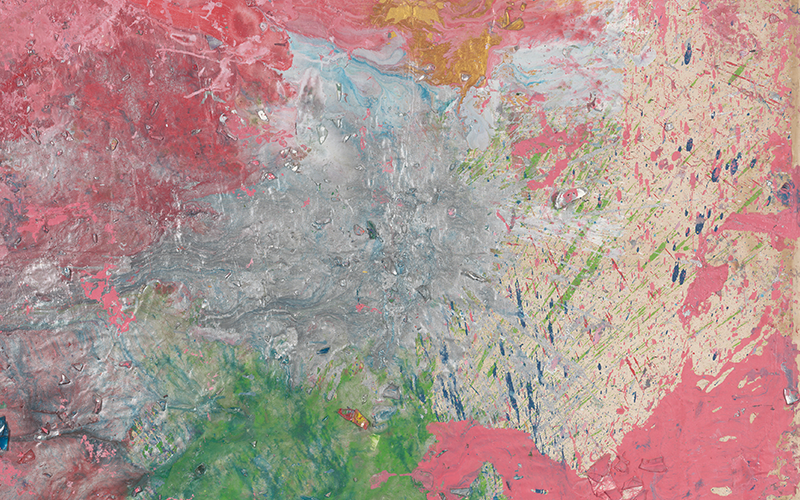
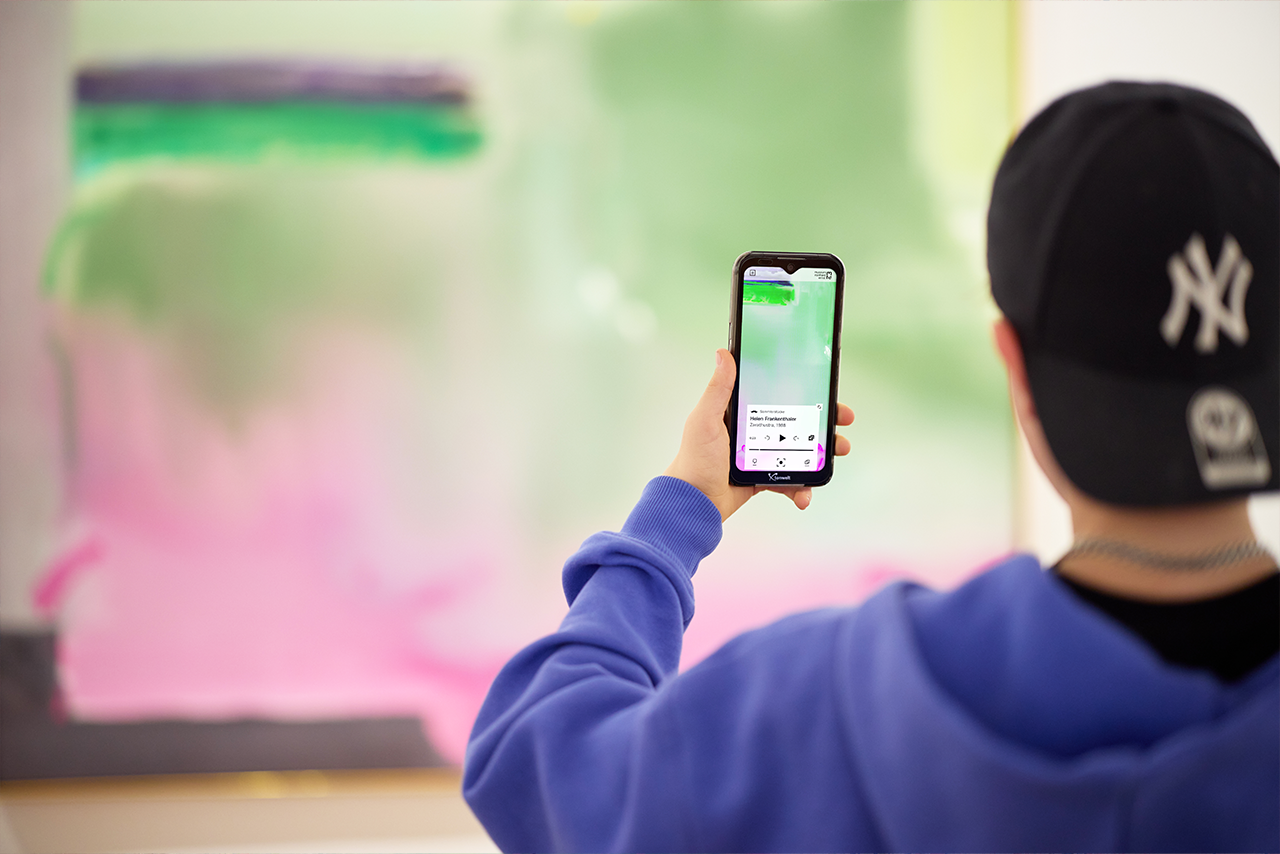
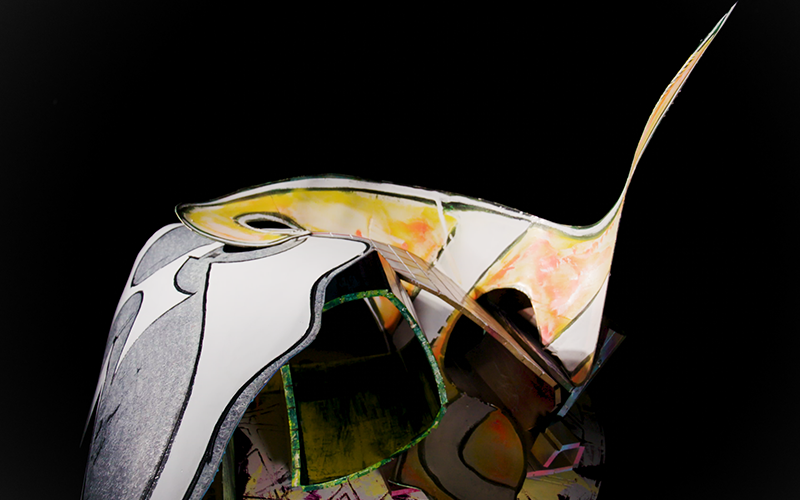
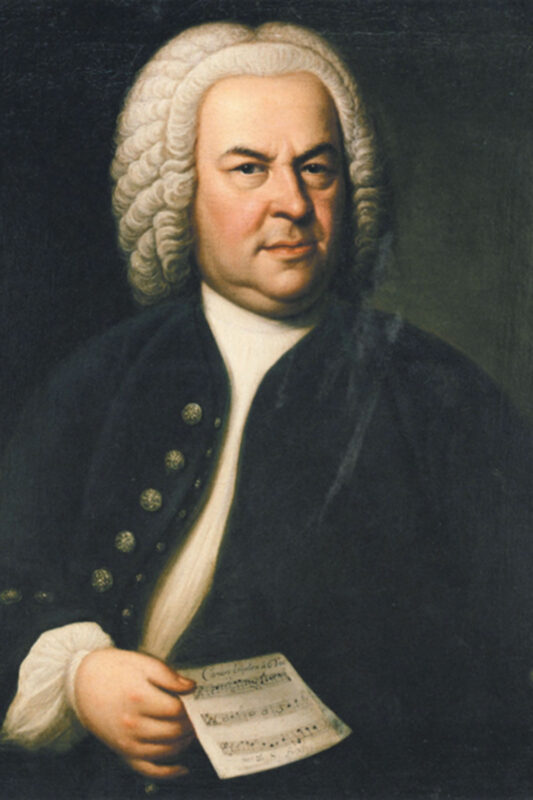
What does Johann Sebastian Bach (1685–1750) have to do with Wolfgang Hollegha (1928–2023)? 20th Century Abstract Painting is not usually associated with Baroque music, right? Are Hollegha’s explosions of colour to be heard?
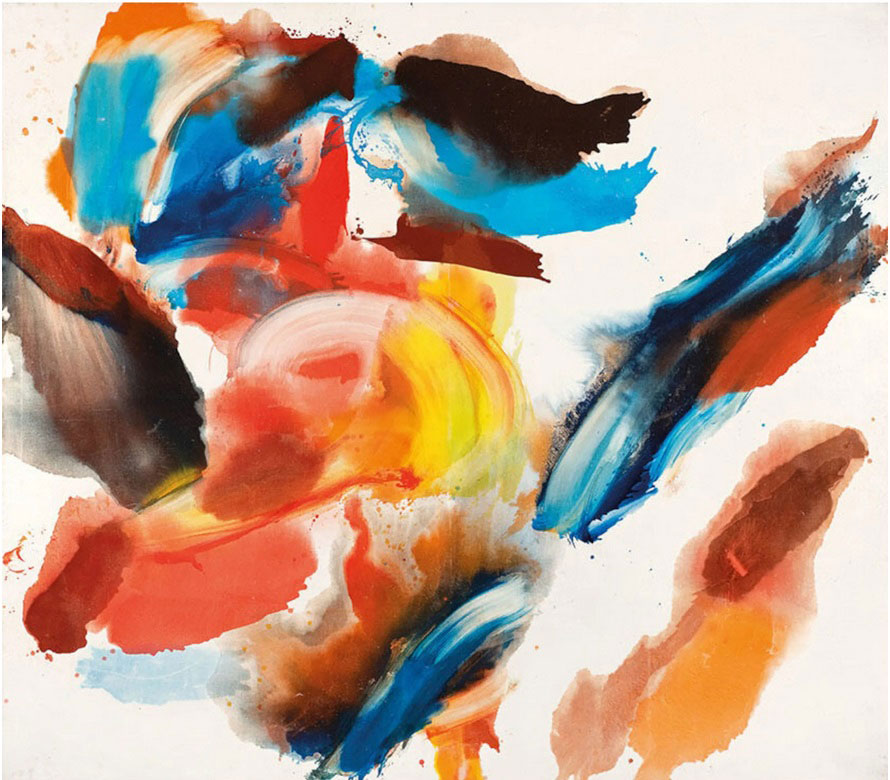
A lot has been written about the parallels between music and art, starting with an equal terminology (think of words like composition or chromatism, and there are many other) to synaesthesia (the beautiful perceptive gift of associating colour or sound at the same time). And even more has been said about the 18th Century Titan of Music. It would be an impossible task to summarise in my short essay Bach’s contribution to art, so in this blog post I focus on how his music shaped Hollegha’s creative practice. Most people who listen intently to music by Bach often experience a special connection with the inscrutable composer, amongst them Wolfgang Hollegha – so much so, that he was willing to let it guide his painting. [1]
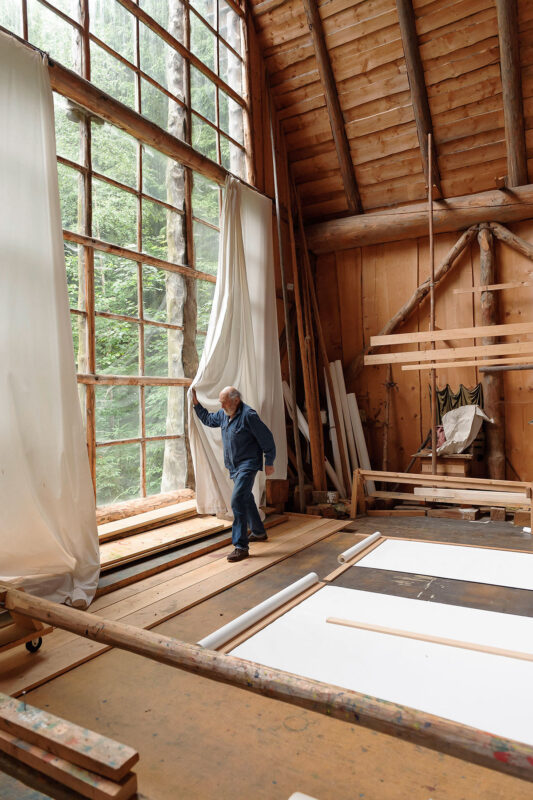
It is a cold morning in February at mount Rechberg: overcast sky, it has snowed. The greyness outside makes Hollegha’s large-format canvas in the studio almost glow defiantly: spring and summer are coming regardless.
Amidst a crowd of journalists caught by surprise with this discovery of an artist who chose to work in seclusion despite his international successes, I am in awe, too. With his mastery of colour, with the freshness and joy these paintings irradiate. There is silence and Hollegha’s son, Daniel, puts on a CD: Bach’s Sonatas and Partitas for violin BWV 1001-1006. Not any sort of ‘easy listening Bach’ and not played by any odd violinist.
There are a number of recordings of Bach’s legendary compositions- alone his Chaconne (BWV 1004) believed by some scholars to be the composer’s mourning for his deceased wife Maria Barbara (1684–1720) whilst away in Köthen[2], has been interpreted by many other instruments than the violin[3]. Listening to it (as well as to most of Bach’s music), ends up being an abstract journey through the inevitable cycles of life and death, joy and grief, presence and absence. And it is from these auditive tributes to our existence that Hollegha drew inspiration for his own painting.
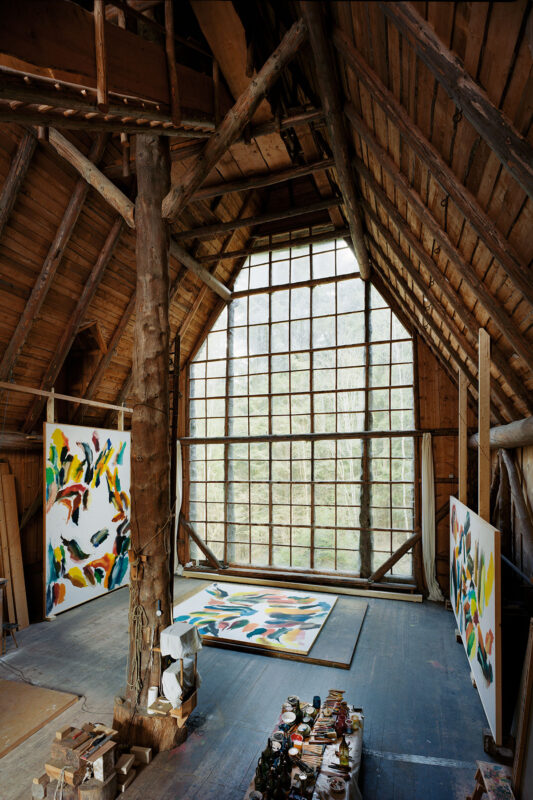
Bach’s first partita emerges from the loudspeaker and fills the cold 15m tall studio, like a thread of colour, meandering through each cobweb-filled corner, light at first and then becoming denser with each crescendo. It is a recording by the Belgian musician and conductor Sigiswald Kuijken (*1944), a pioneer in unearthing Baroque playing techniques in order to come closer to an historically accurate and authentic interpretation of Baroque music[4]. Kuijken’s recording stands out for its clarity and rigour in conveying Bach’s masterful interplay between mathematical pattern and virtuous cascades of notes. This must have resonated with Hollegha, since, despite the at first glance coincidental appearance of his swathes of colour, his painting process was quite the contrary: Hollegha listened to that particular recording over and over again, memorising the interpretation, knowing how long Kuijken would hold a particular pause to irrupt afterwards in one of Bach’s challenging cadenzas. Anecdotally, once Hollegha’s HIFI equipment included the repeat button, this proved to be incredibly useful for him, as he no longer had to interrupt his work to go back to the CD player and constantly press rewind and play. Hollegha’s son Daniel recalls that the painter would not even attempt to paint if there was a thunderstorm warning. The risk of a lightning strike interrupting his music and therefore impacting his own work was too high.
“Like a circus horse. It dances to certain tunes, too. And I like to paint to certain tunes. I like listening to old music. Old musicians are as strict as 12-tone composers, but even more alive. They are just as authentic. My painting is like a fugue.”[5]
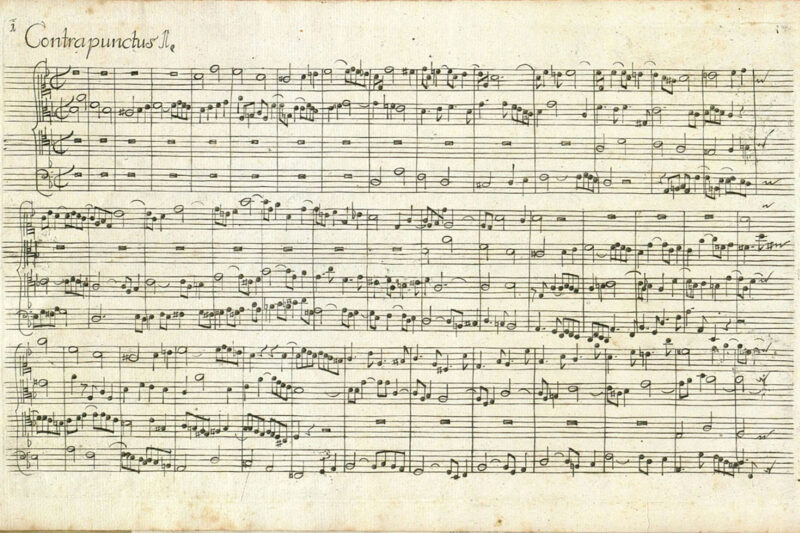
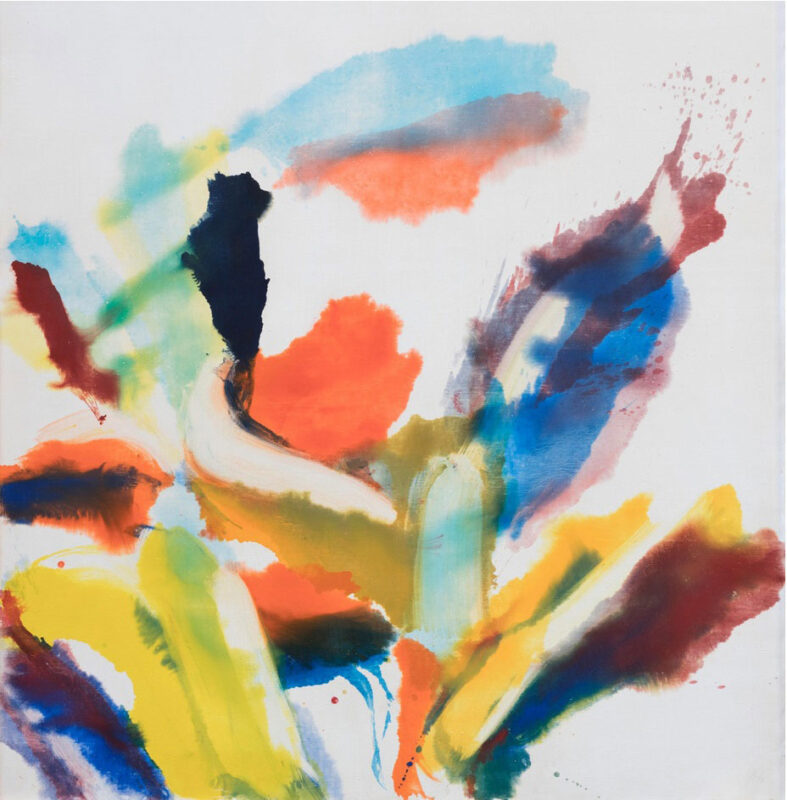
By describing his works like a type of musical composition, a fugue (literally flight), Hollegha gives a clue to the structure underlying his own works: in a fugue, the main melody or voice is then picked up at a later point by a second voice, in an interplay resembling a ‘catch me if you can’. Many of Hollegha’s compositions do indeed follow that pattern, and the result is mesmerising: Working in utmost concentration and with no movement left to chance, perhaps even choreographed, Hollegha’s compositions seem to dance for our eyes, with a lightness of touch that uplifts the spirit.
Listening to Bach whilst seeing Hollegha’s works proves to be a deeply moving experience. At the Museum Reinhard Ernst, we are pleased to offer this opportunity to all visitors joining us on June 6th through the live choir performance by Graz’s Chapel Boys. A day to mark in your calendar!
Standard admission fees apply (pop up concert is included in the entry price). Book your tickets here.
Click here to get a glimpse of the artist’s studio and Bach’s music in the background.
Text: Ines Gutierrez, Museum Reinhard Ernst
With many thanks to Daniel Hollegha for providing an insight into Wolfgang Hollegha’s painting process.
Footnotes:
[1] John Eliot Gardiner, Music in the Castle of Heaven. A Portrait of Johann Sebastian Bach, Penguin Books, Milton Keynes 2014, p. xxviii.
[2] Andrea Schurian, ‘Wolfgang Hollegha. Der Komponist der Bewegung’, first published in Parnass, 21.1.2004 www.andreaschurian.at/parnass/wolfgang-hollegha-der-komponist-der-bewegung/andrea-schurian/ (last accessed 24.05.26)
Helga Thoene. Ciaccona – Tanz oder Tombeau? Eine analytische Studie, Ziethen 2016. For a critical review of this theory see also: Henriette Rosenkranz, ‘Chaconne (Johann Sebastian Bach, BWV 1004)’ in: www.violinorum.com/de/chaconne-johann-sebastian-bach-bwv-1004/#chaconne-kontext (last accessed 24.05.26)
[3] An interesting alternative is offered by Hélène Grimaud in her impressive interpretation of Ferruccio Busoni’s transcription of the Chaconne for pianoforte: in Bach, Deutsche Grammophon, 2008.
[4] Gardiner (2014), p.9.
[5] Andrea Schurian (2004). Further reading on Hollegha’s artistic practice in relation to music can be found in Renate Wiehager: ‘Wolfgang Hollegha. On the Colouristic Grammar of Perception’ in Wolfgang Hollegha, ed. by Museum Reinhard Ernst, Neue Galerie Graz, Wienand Verlag 2025, pp. 77-79.
You are currently viewing a placeholder content from Hubspot Embedded Content. To access the actual content, click the button below. Please note that doing so will share data with third-party providers.
More InformationYou are currently viewing a placeholder content from HubSpot. To access the actual content, click the button below. Please note that doing so will share data with third-party providers.
More InformationYou are currently viewing a placeholder content from Hubspot Meetings. To access the actual content, click the button below. Please note that doing so will share data with third-party providers.
More Information