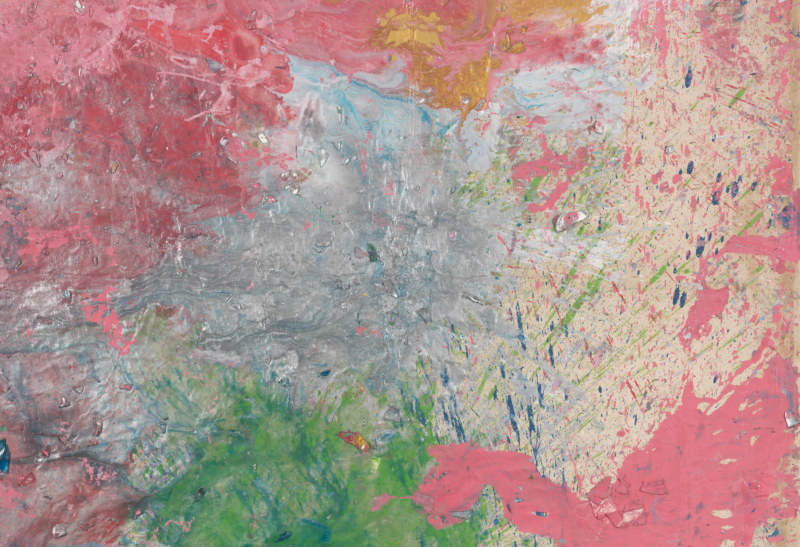
In 1957, Wiesbaden made art history: under the title Couleur vivante – Lebendige Farbe, the first landmark exhibition of abstract French and German painting in Germany took place at the town’s municipal museum. This major museum presentation of informal painting brought together 16 artistic positions, eight per country, from France and Germany respectively. The exhibition set a bold and avant-garde precedent in postwar Germany and established Wiesbaden as a significant venue for contemporary art.
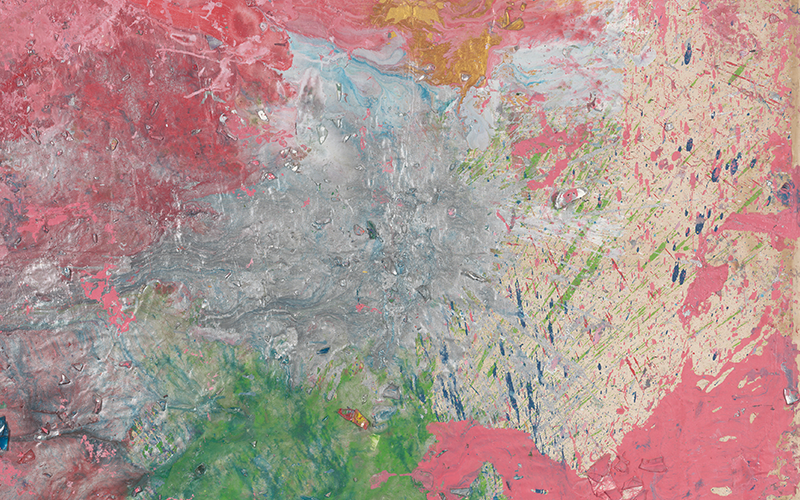
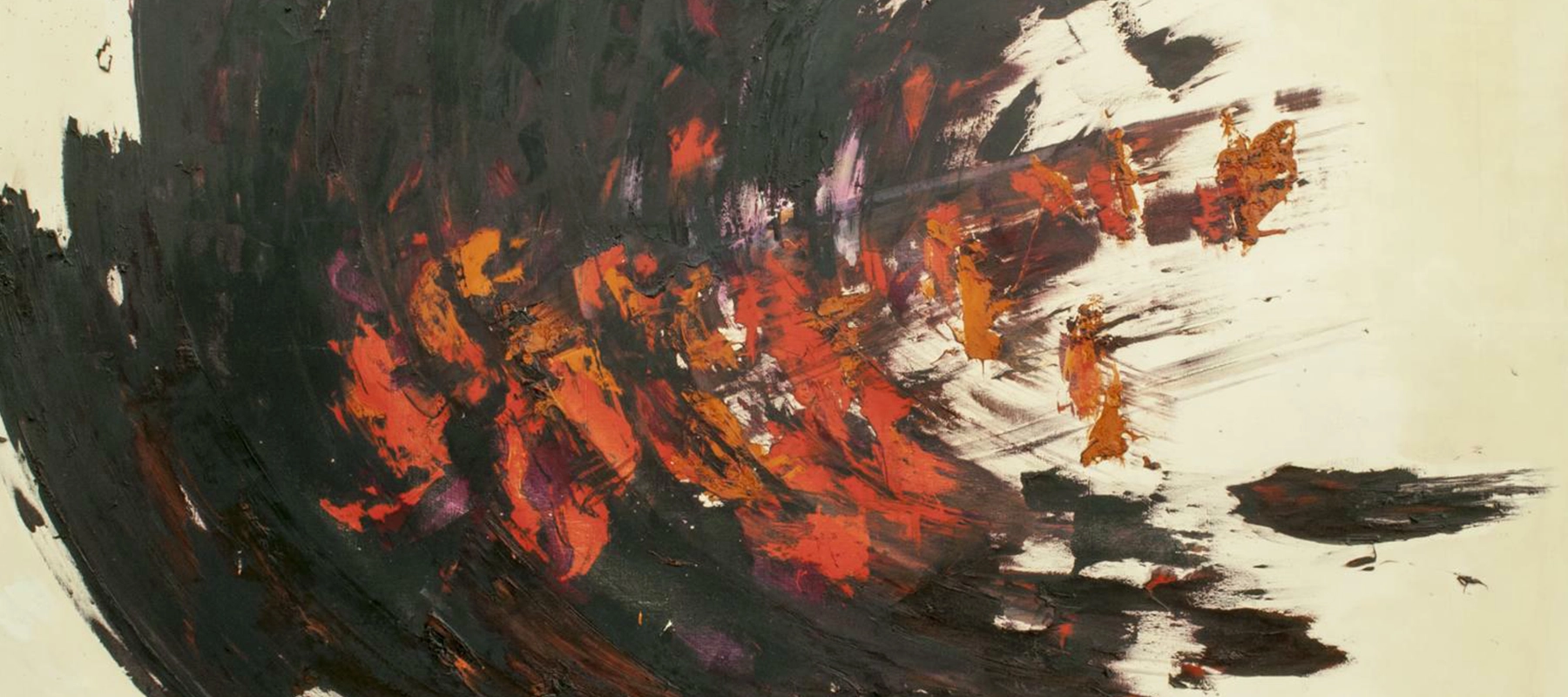
To mark the 70th anniversary in 2027, the Museum Reinhard Ernst is planning an exhibition that partially reconstructs the historic show and makes tangible the breadth and life-affirming novelty of abstract painting in the 1950s. At the heart of the mre’s temporary exhibition are the works by Judit Reigl, the only female artist who was part of the group exhibition in 1957.
The Hungarian-French artist Judit Reigl (1923–2020) successfully escaped from Hungary in 1950 – after eight failed attempts and a three-month journey to Paris, part of which she completed on foot. Following a creative phase shaped by Surrealism, she turned to Abstraction in the early 1950s.
In 2026/2027, the mre looks both backward and forward: The example of Couleur vivante demonstrates how personal commitment and cross-border collaboration can overcome deeply entrenched resentments. The remarkably swift reconciliation between Germany and France after World War II encourages us to draw strength from shared history for future challenges, and inspiration for a vibrant coexistence.
Judit Reigl. Couleur vivante takes place within the framework of a collaboration between Museum Reinhard Ernst, Museum Wiesbaden – Hessian State Museum for Art and Nature, and Nassauischer Kunstverein Wiesbaden. With distinct focal points, the three neighbouring institutions connect to the historic exhibition, thereby contributing to the development of Hesse’s artistic and cultural scene through this significant milestone.
Works on view by:
François Arnal, Camille Bryen, Jean Degottex, Claude Georges, Karl Otto Götz, Otto Greis, Simon Hantaï, Gerhard Hoehme, Heinz Kreutz, Judit Reigl, Bernard Schultze, Jaroslav Serpan, K.R.H. Sonderborg, Fred Thieler, Claude Viseux und Wilhelm Wessel