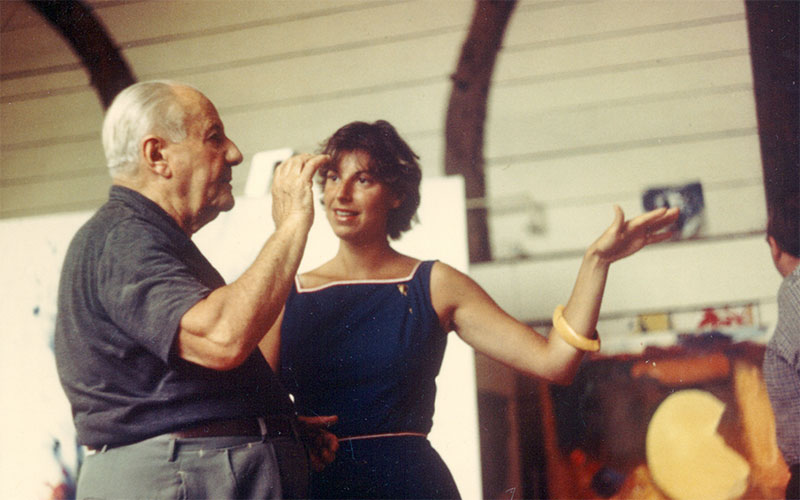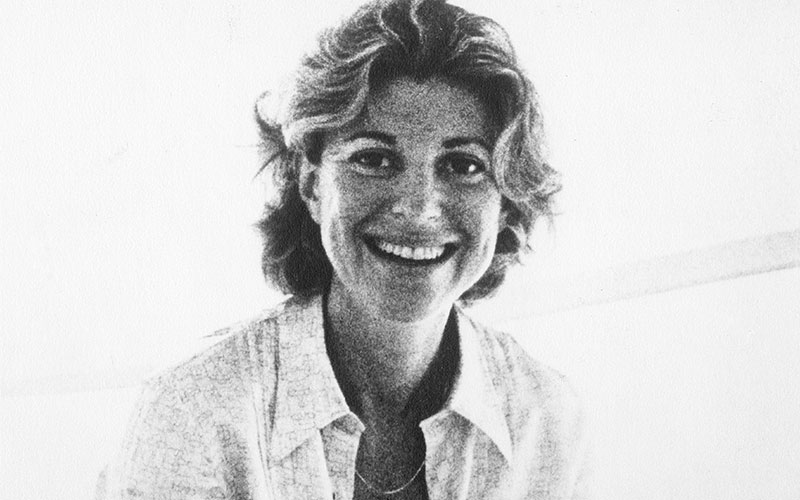
The American painter Helen Frankenthaler (1928–2011) achieved what was granted to only a handful of her female contemporaries: a successful international career in an art world and gallery scene dominated by men. At the age of 23, she held her first solo exhibition in 1951 at New York’s influential Tibor de Nagy Gallery. By 1959, Frankenthaler had begun exhibiting regularly in major international exhibitions, including the Venice Biennale in 1966. The Jewish Museum and the Whitney Museum of American Art both organized major retrospectives of her work. In 1989, she became only the second female artist, after Lee Krasner, to be honored with a solo exhibition at the Museum of Modern Art (MoMA) in New York.
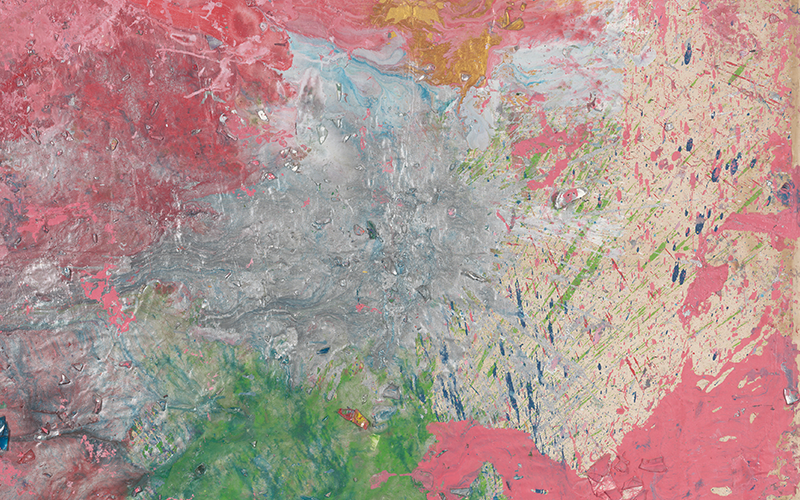
In the New York art scene of the 1950s, Frankenthaler established herself with the soak-stain technique she developed, in which thinned paint soaks directly into unprimed canvas. As one of the first artists of her generation, she spread her canvases out on the floor and applied paint with sponges and brushes—a revolutionary approach. She created compositions that redefined the relationship between colour, form, and space.
Frankenthaler’s work represents a significant contribution to a distinctly modern understanding of artistic practice. Whereas authorship and control had remained unquestioned priorities well into the early decades of the twentieth century, her paintings opened up new possibilities for process, materiality, and the autonomy of paint itself.
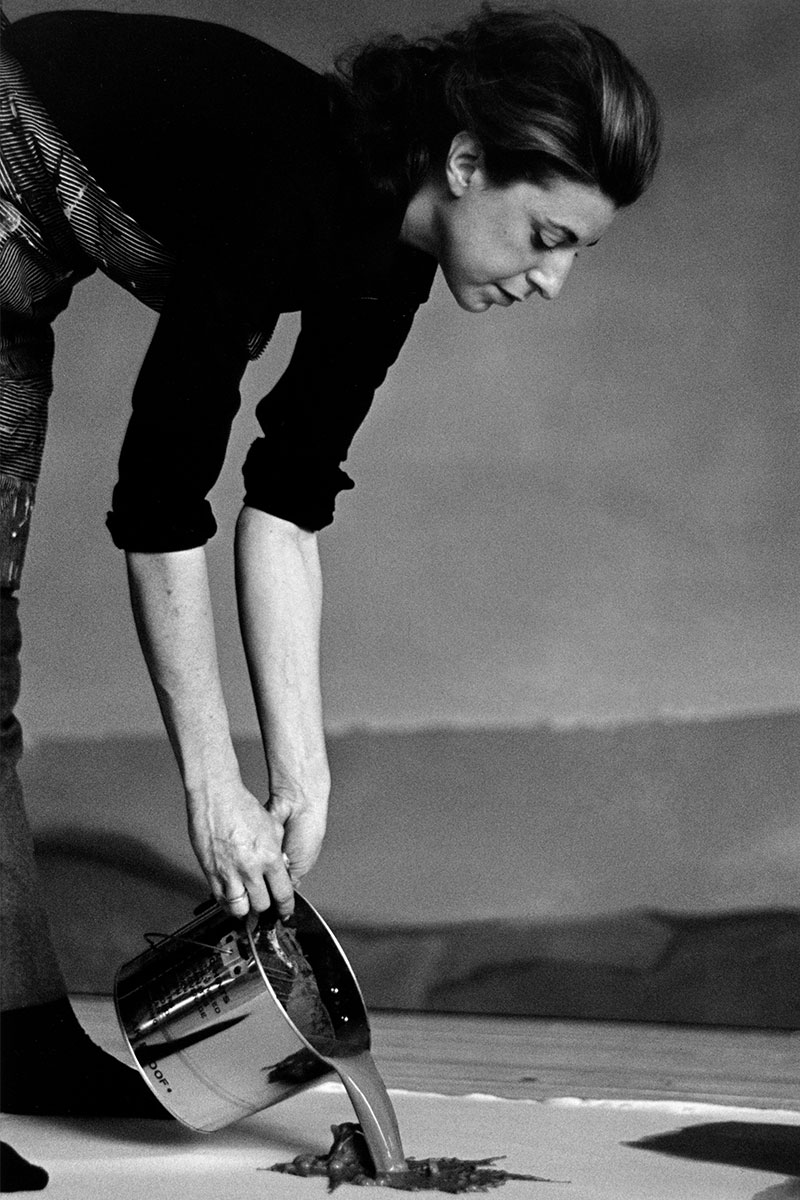
Frankenthaler pursued a different path from her male contemporaries, whose dynamic brushstrokes and flying splashes of paint embodied the energy of Action Painting. With her distinctive soak-stain technique, she opened up entirely new possibilities for painting.
Today, she is celebrated as a pioneering figure who bridged Action Painting and Colour Field painting, giving American post-war art a decisive new direction. Her paintings are driven by a willingness to take risks: by refusing to impose limits on her own artistic practice, Frankenthaler created expansive, luminous works of remarkable freedom. An oeuvre whose relevance remains undiminished today.
With 53 works, the Museum Reinhard Ernst is home to the world’s largest private collection of paintings by the American artist Helen Frankenthaler. Since 2011, museum founder and entrepreneur Reinhard Ernst has assembled an exceptional group of masterpieces dating from 1950 to 1997—a collection that grew largely out of public view for many years and was only made accessible with the opening of the museum in 2024.
The breadth of the collection offers a unique insight into the richness and diversity of Frankenthaler’s oeuvre. It traces the artist’s remarkable stylistic development over five decades while bringing together outstanding examples from key phases of her career that vividly demonstrate her extraordinary capacity for artistic innovation. Particular emphasis is placed on the works of the 1970s, a pivotal period in her artistic development.
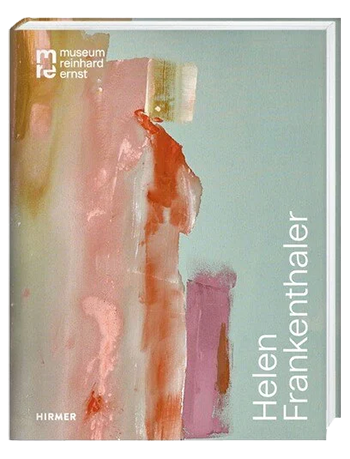
Helen Frankenthaler
Publishers: Reinhard & Sonja Ernst-Stiftung
Essays by D. Dreishpoon, R. Ernst, L. Kikol, O. Kornhoff, L. Schäfer
German-English edition
160 pages, 75 colour illustrations
25 × 30,7 cm, hardcover
978-3-7774-4538-0
Accompanying the exhibition Helen Frankenthaler. Move and Make, Museum Reinhard Ernst and the Berlin-based audio and television production company Studio Jot are creating a six-part podcast series about one of America’s most innovative artists. Every Tuesday, you can find the latest episode here and listen in!
[This podcast is recorded in German]
The artist occupies a central position, among other places, in the presentation on the museum’s second floor. There, she appears in changing contexts alongside her contemporaries, including close artistic peers such as Robert Motherwell, Morris Louis, Kenneth Noland, Jules Olitski, and Frank Stella, with whom she shared close connections.
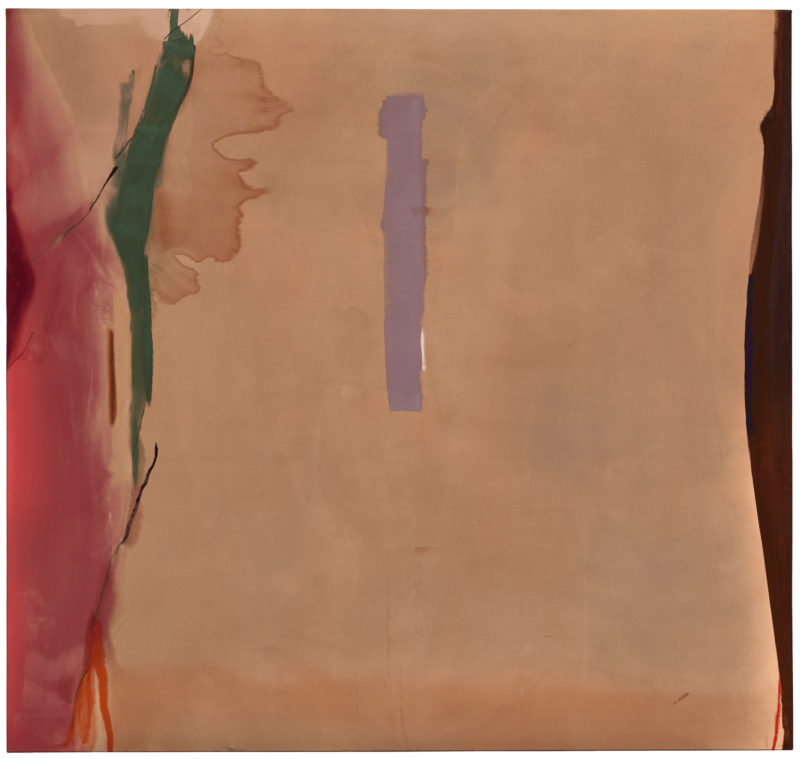
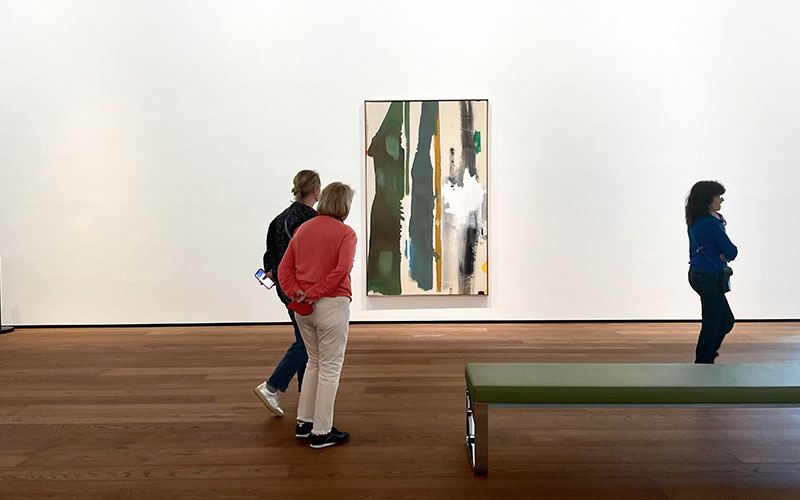 Helen Frankenthaler, Hansel and Gretel, 1975 © Helen Frankenthaler Foundation, Inc. / VG Bild-Kunst, Bonn 2026
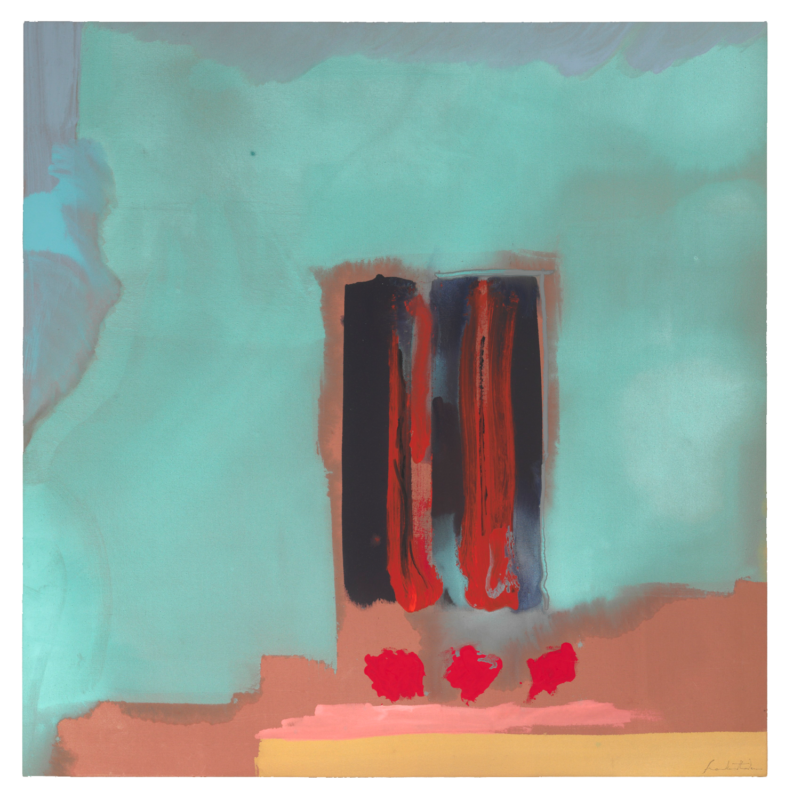
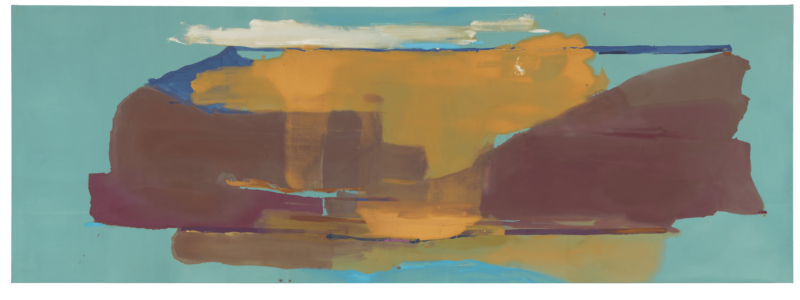
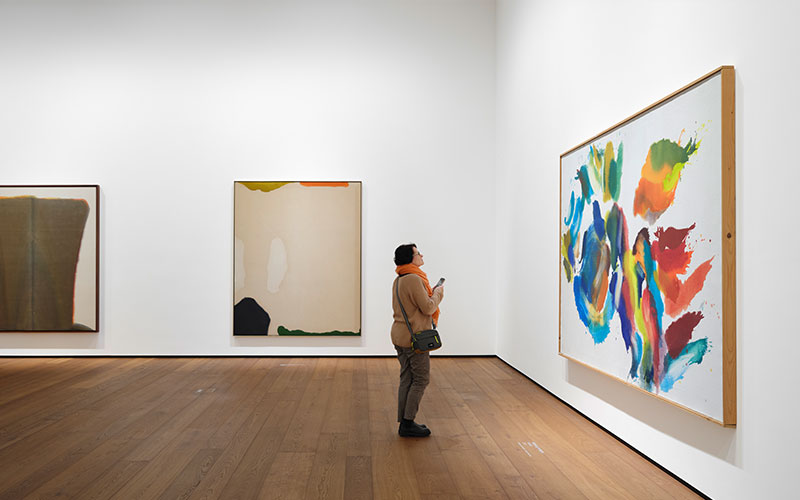 Helen Frankenthaler, One O’Clock, 1966 © Helen Frankenthaler Foundation, Inc. / VG Bild-Kunst, Bonn 2026
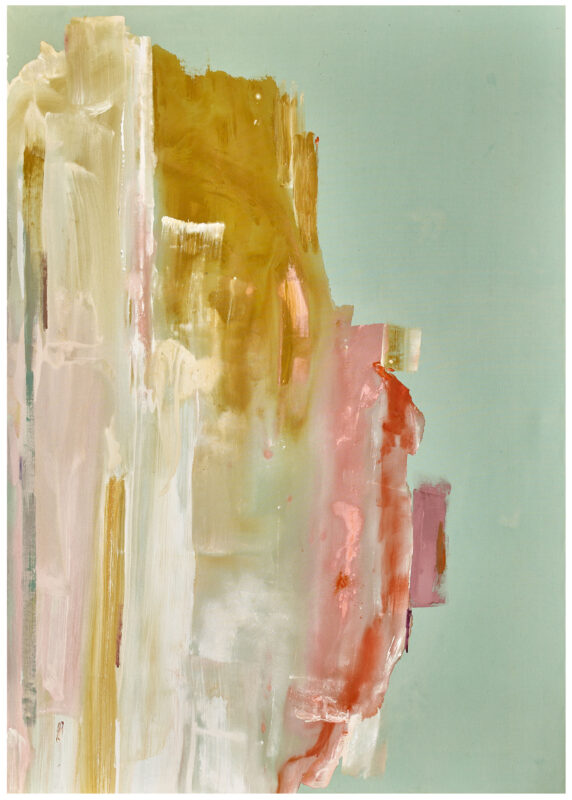
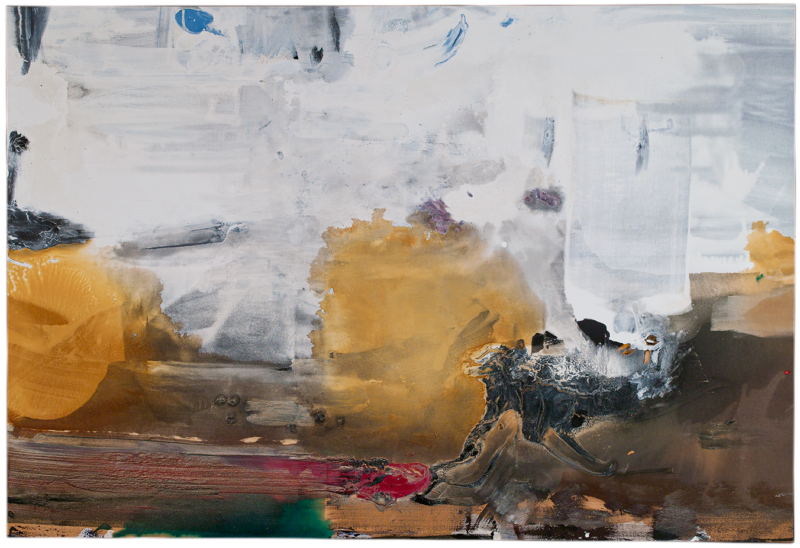
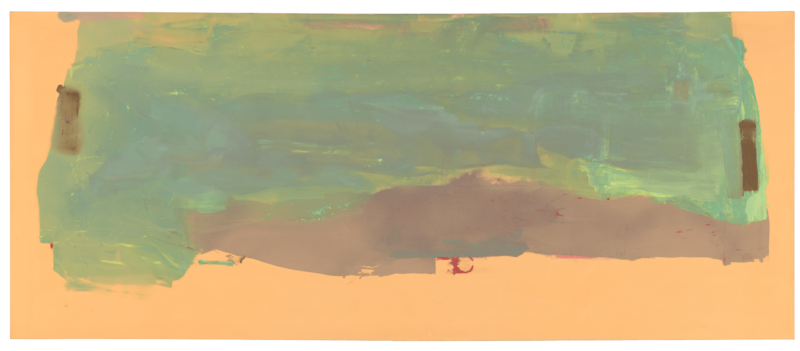
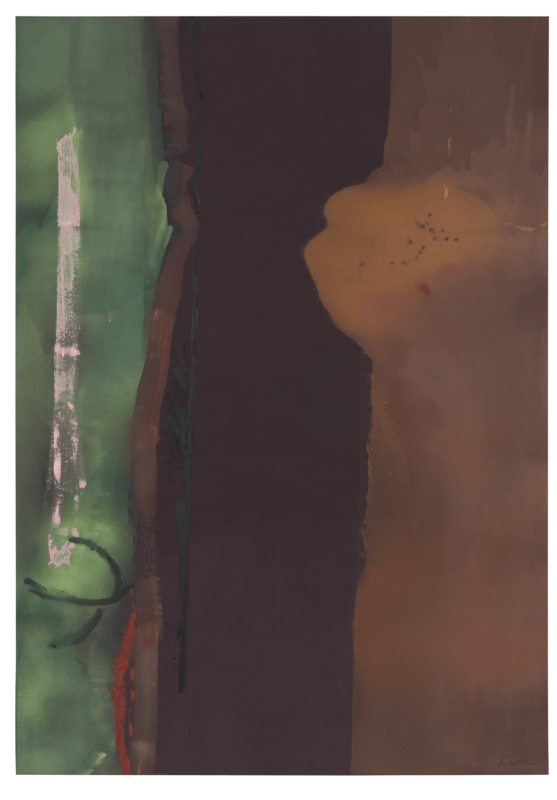
The Reinhard Ernst Collection includes 53 works by the artist. The oldest is Provincetown Harbor from 1950, and the most recent is Untitled from 1997.
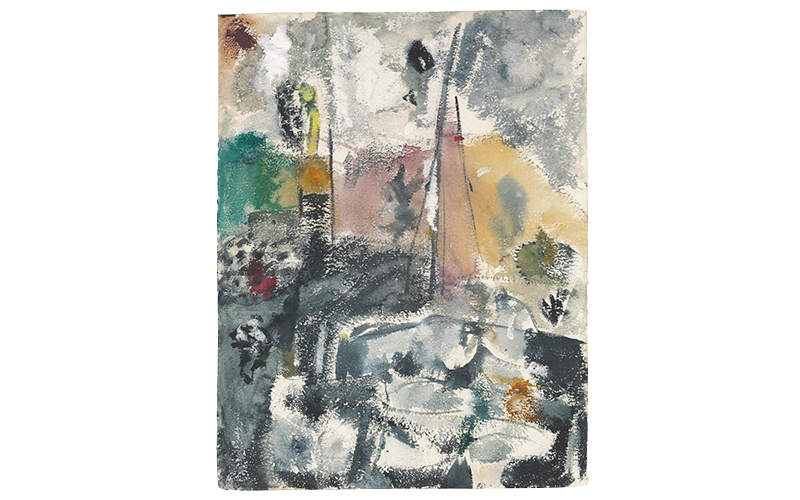
Helen Frankenthaler, Provincetown Harbor, 1950 © Helen Frankenthaler Foundation, Inc. / VG Bild-Kunst, Bonn 2026
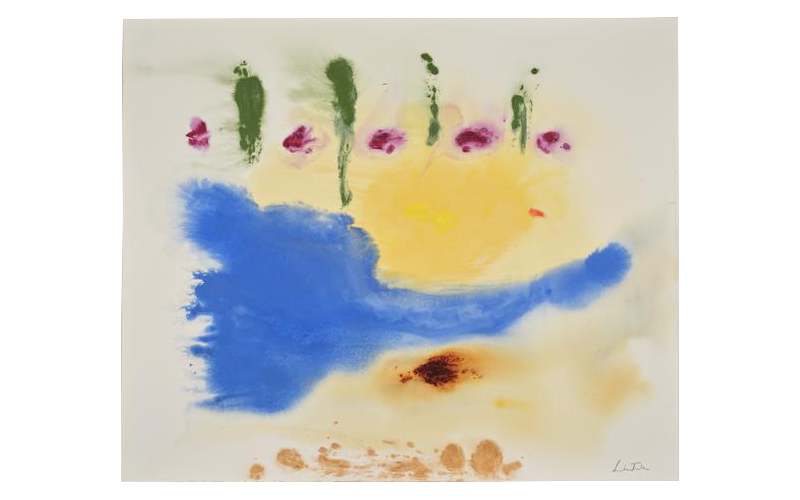
Helen Frankenthaler, Untitled, 1997 © Helen Frankenthaler Foundation, Inc. / VG Bild-Kunst, Bonn 2026
You can see three works by Helen Frankenthaler in our gallery rooms:
Helen Frankenthaler, One O’Clock, 1966
Helen Frankenthaler, Hansel and Gretel, 1975
Helen Frankenthaler, Tight Rope, 1969
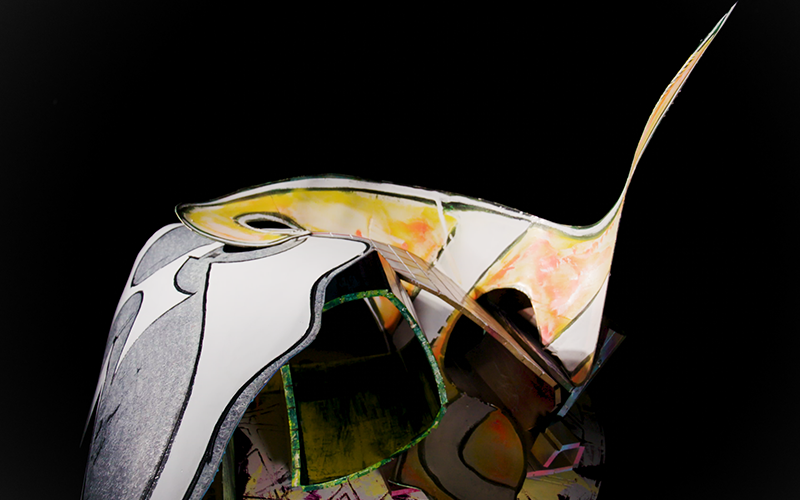
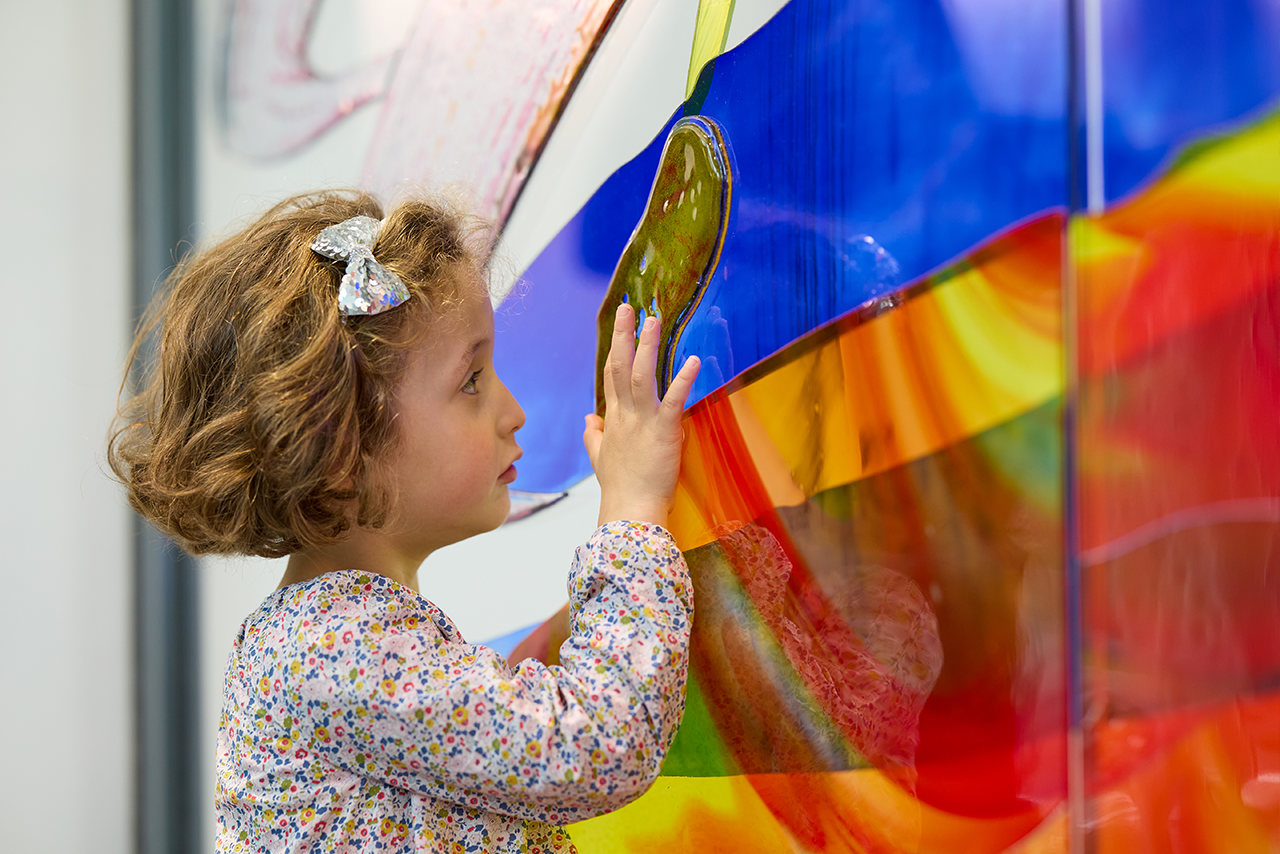
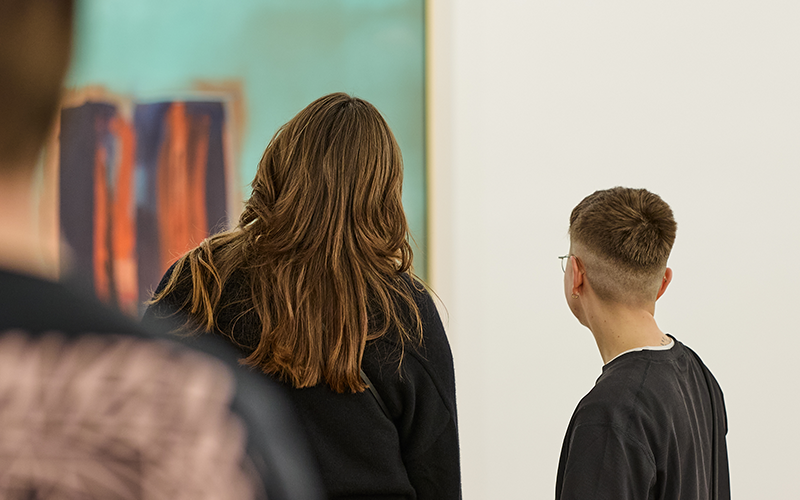
At the Museum reinhard Ernst, the year 2025 was entirely dedicated to Helen Frankenthaler with two exhibitions. Following Helen Frankenthaler. Move and Make, the mre invited visitors to experience the pioneering art of the American artist in dialogue with the present through the exhibition Helen Frankenthaler moves.
Exhibition teaser: Helen Frankenthaler Move And Make
Exhibition trailer: Helen Frankenthaler Move And Make
Exhibition trailer: Helen Frankenthaler Moves Jenny Brosinski, Ina Gerken, Adrian Schiess
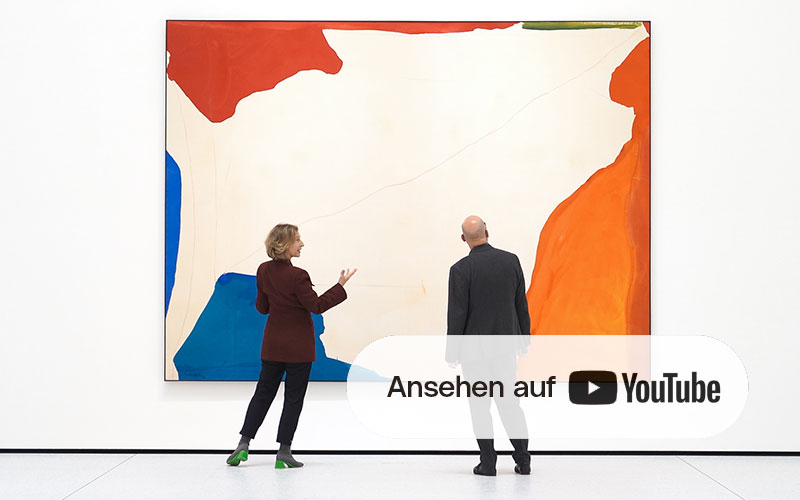
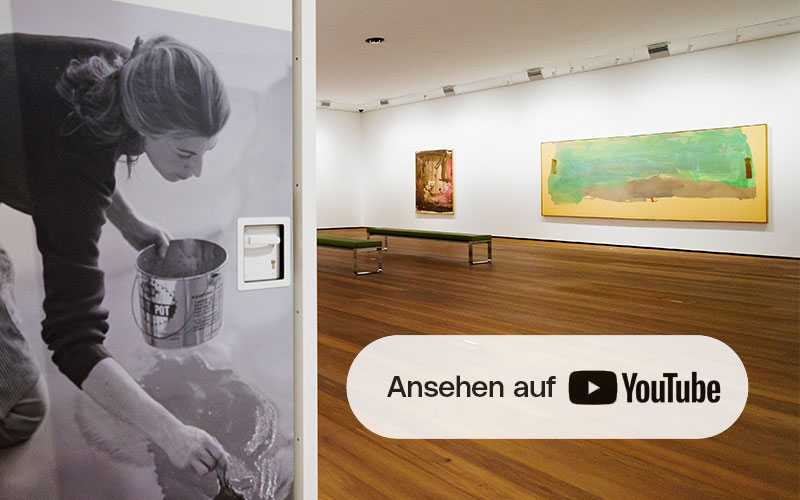
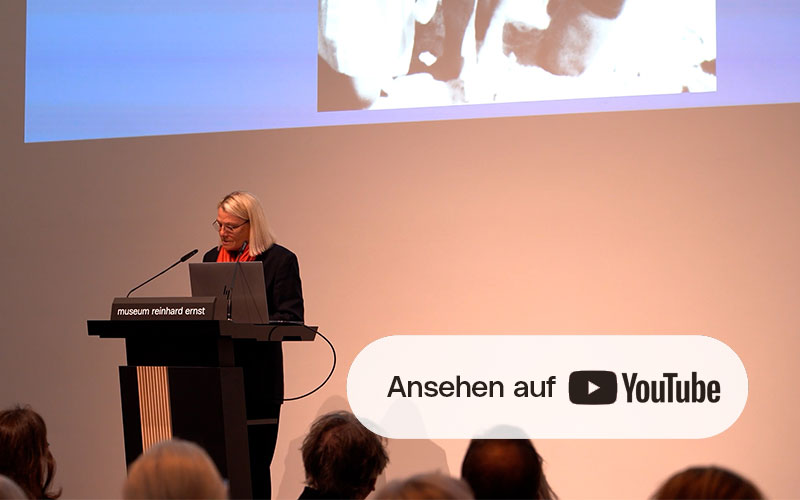
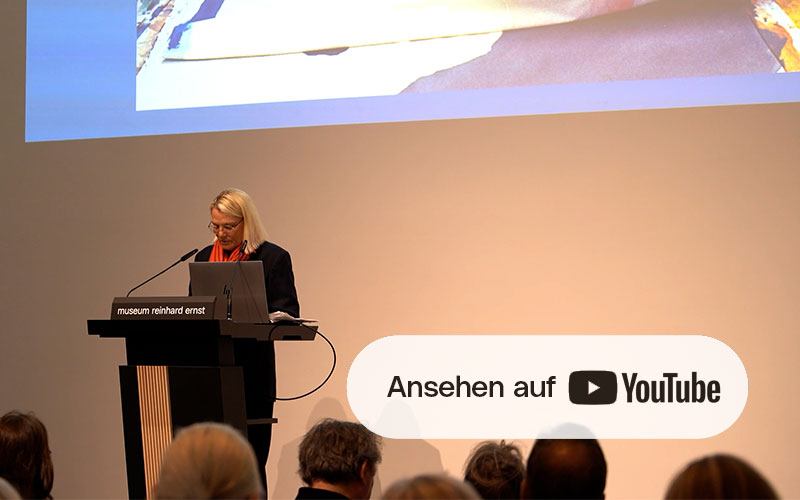
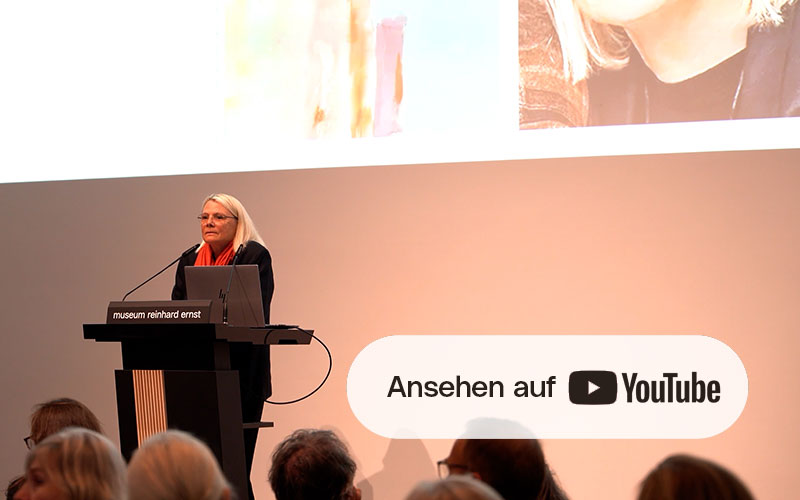
On 28th September 2025, visitors had the unique opportunity to gain a firsthand insight into the life and work of Helen Frankenthaler. Lise Motherwell, Helen Frankenthaler’s stepdaughter and the daughter of American painter Robert Motherwell, Frankenthaler’s husband, was a guest at the Museum Reinhard Ernst. Motherwell, who also serves as Chair of the New York-based Helen Frankenthaler Foundation, travelled from New York to share deeply personal memories of her childhood growing up with two renowned artists.
Part I
Part II
Part III
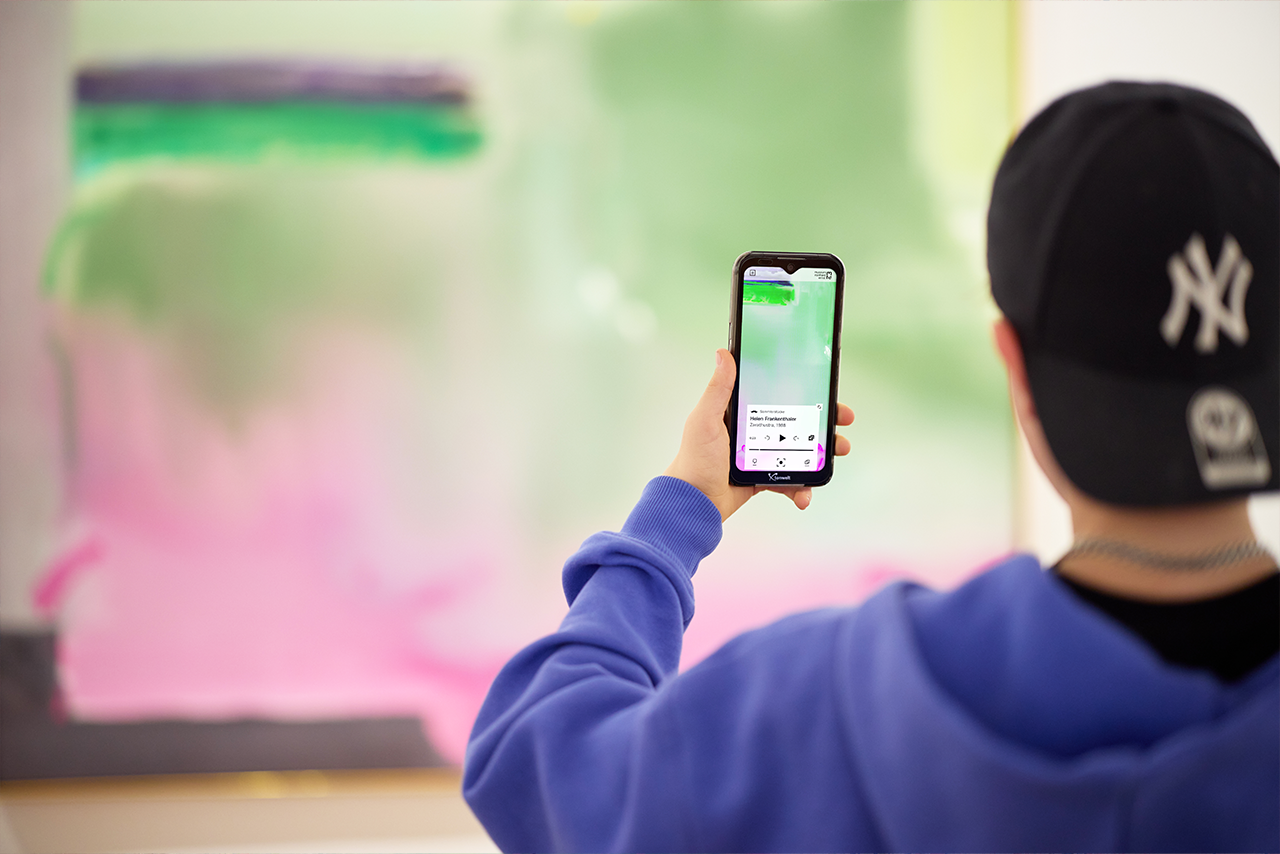
Various formats showcase the artist in an accessible way—why not take a look?
Work of the week:
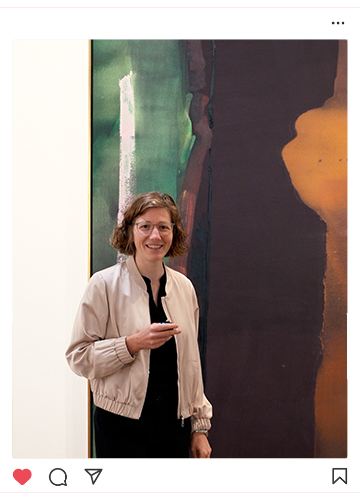
Barcelona, 1987
Work of the week held in Ukrainian:
Second Wind, 1976
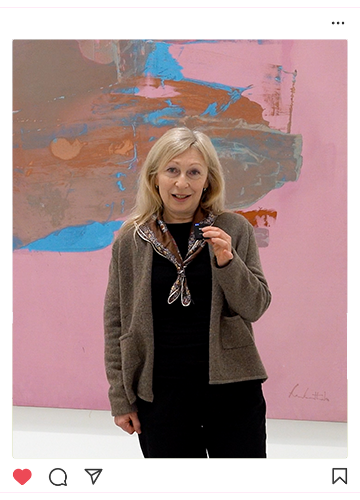
Work of the week:
After Hours, 1975
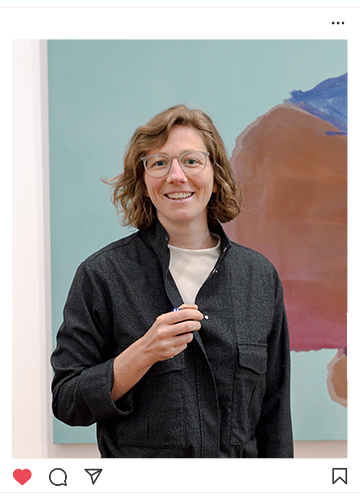
From 18.04. to 23.08.2026, the work For Hiroshige (1981) is on view at the Kunstmuseum Basel in the exhibition Helen Frankenthaler.
You are currently viewing a placeholder content from Hubspot Embedded Content. To access the actual content, click the button below. Please note that doing so will share data with third-party providers.
More InformationYou are currently viewing a placeholder content from HubSpot. To access the actual content, click the button below. Please note that doing so will share data with third-party providers.
More InformationYou are currently viewing a placeholder content from Hubspot Meetings. To access the actual content, click the button below. Please note that doing so will share data with third-party providers.
More Information